While Guangdong’s overall strength may not match Beijing’s, making their loss reasonable, they still had opportunities to win against the odds. In Game 2, Guangdong secured a dramatic buzzer-beater victory, leveling the series at 1-1.
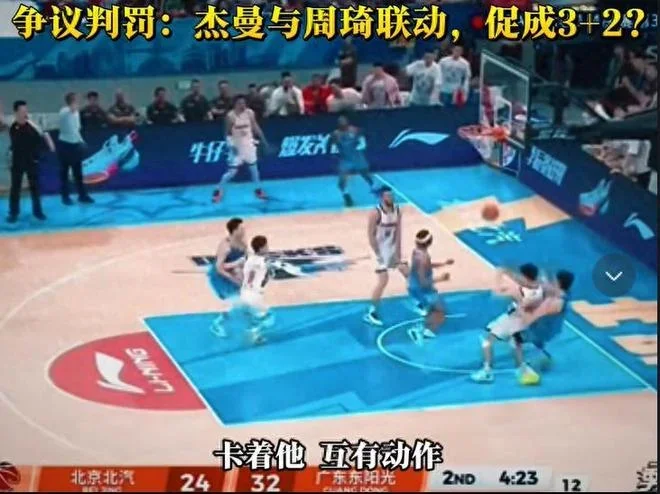
Game 3 on Tuesday night presented another chance for Guangdong. They surged to a 10-point lead early in the second quarter. However, a series of questionable and inconsistent calls from the officials significantly altered the game’s momentum. With about four minutes left in the second quarter and Guangdong leading by eight, a controversial ruling occurred: Beijing’s Jemaine scored a three-pointer while drawing a foul, and Guangdong’s Zhang Haochao was also called for a foul on the play, resulting in a four-point possession. This sparked an 18-3 run for Beijing, cutting the lead to just three points. Refereeing analysts noted that Zhou Qi was also involved in contact with a white-shirted player, suggesting that a foul on Zhou could have been called instead.
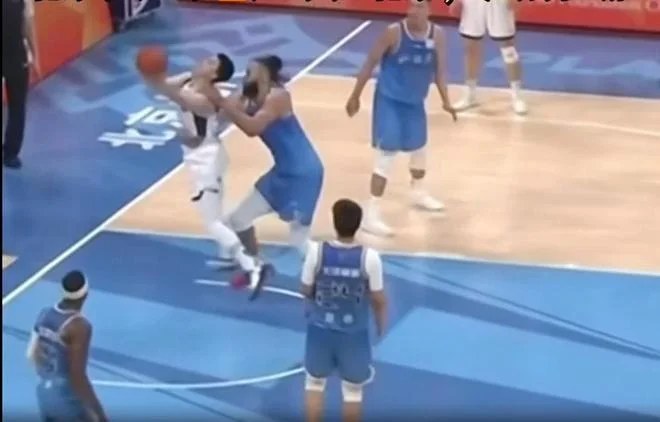
Beyond this pivotal call, the game was marred by a clear double standard in officiating, particularly in the first and second quarters. With 44 seconds left in the first quarter, Guangdong guard Hu Mingxuan drove to the basket and was pulled down by Beijing’s McGee, who was assessed a common foul, gifting Hu two free throws. Fast forward to the 4:40 mark of the second quarter, Guangdong’s Du Runwang committed a nearly identical foul, pulling down Zhou Qi during a layup attempt. This time, the referee immediately called an unsportsmanlike foul, giving Zhou two free throws and possession of the ball.
These two calls present a stark double standard. An officiating expert analyzed both incidents, asking: “What is the difference between these two actions? Both were targeted at the player, both involved grabbing the shoulder from behind. One was a common foul, the other an unsportsmanlike. I don’t need to say more—the answer is clear.” The expert implied that consistent officiating would have treated both the same way, either as common fouls or both as unsportsmanlike. The fact that they were judged differently suggests bias.
Although Guangdong lost the game, they trailed by only five or six points for most of the second half. The controversial four-point play for Jemaine and the two double-standard calls effectively gave Beijing an extra seven or eight points. Such inconsistent officiating inevitably influenced the game’s outcome.